Source CNC Gantry Laser Cutting Machine for Auto, Agri, Oil
Compare 30 available CNC gantry laser cutting machines suitable for automotive, agriculture machinery, and petroleum manufacturing. These fiber laser systems support water cooling and offer customization for metal sheet processing.
Key considerations
Products List


Gantry Type Metal Cutting Machine with Exchanged Table CNC Fiber Laser Cutting Machine
$7000.00 - $28000.00
MOQ: 1 Pieces


Gantry Laser Cutting Machine for 18mm 20mm 25mm 30mm 40mm 50mm Steel
$46666.00 - $428699.00
MOQ: 1 set
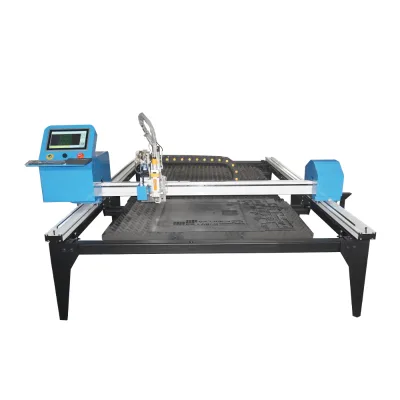


CNC Laser Metal Cutting Machine Metal Laser Cutting Machine for Sale
$11800.00 - $19000.00
MOQ: 1 Sets

Laser CNC Machine Stainless Steel Laser Cutting Machine Metal Laser Cutter Machine
$13800.00 - $19000.00
MOQ: 1 Sets


CNC Laser Cutting Machine Laser Cutting Machines Cutting Laser Machinery
$14999.00 - $19999.00
MOQ: 1 Pieces


Comprehensive Sourcing Guide
Strategic Sourcing Guide for CNC Gantry Laser Cutting Machines
Understanding the Core Technical Architecture
When sourcing a CNC Gantry Laser Cutting Machine, buyers must first distinguish between the specific laser technologies and structural configurations available in the current market. The observed product landscape reveals a significant divergence in laser classification, with listings citing both "Gaseous Laser" and "Free Electron Laser" alongside "Fiber Laser" systems. For industrial procurement, the fiber laser architecture is the dominant standard for metal processing, offering high efficiency and lower maintenance compared to traditional gaseous alternatives. The technical specifications indicate that these machines typically operate as "Continuous Wave Laser" systems, which are essential for cutting through thick metal sheets with consistent beam delivery.
The physical structure of these units is predominantly "Gantry Type," providing a stable framework for the cutting head to traverse the material. This design supports large working areas, with observed specifications ranging from compact portable units to industrial-scale tables with dimensions such as 2300x10000mm. The power output is a critical variable, with observed models ranging from 1500W to 12000W (12KW). The specific power requirements should align with the thickness of the materials being processed; for instance, a 3KW to 12KW configuration is often observed for heavy-duty applications involving carbon steel and stainless steel. Buyers should verify the exact power rating against their production volume needs, as higher wattage directly impacts cutting speed and material thickness capacity.
Component Selection and System Integration
The performance of a CNC Gantry Laser Cutting Machine is heavily dependent on the quality of its integrated components. The supply chain data highlights specific brands and models that are frequently associated with these systems, such as "Raycus," "Jpt," and "Max" for fiber laser sources, and "Raytools" for laser heads. These components are critical for beam quality and cutting precision. The motor and driver systems are also a key differentiator, with "Japan Yaskawa Servo Motors" appearing as a standard for high-precision motion control. The positioning mode often utilizes a "Red Light" system for initial alignment, ensuring the cutting path matches the design file accurately.
Cooling and lubrication systems are equally vital for maintaining operational stability. The observed data points to "Water Cooling" systems with dedicated "Water Coolers" to manage the thermal load of high-power lasers. Additionally, "Automatic Oil Lubrication" is a standard feature on many gantry models, reducing manual intervention and extending the lifespan of linear guideways. The electrical requirements vary significantly; while some industrial units operate on 3/380V three-phase power, other portable or smaller variants may function on AC 110-220V single-phase systems. Buyers must ensure their facility's power infrastructure matches the specific voltage and frequency (50-60Hz) requirements of the selected machine to avoid operational failures.
Material Compatibility and Process Capabilities
The versatility of a CNC Gantry Laser Cutting Machine is defined by its ability to handle various metals and alloys. The observed specifications list a broad range of applicable materials, including "Carbon Steel," "Stainless Steel," "Copper," "Aluminum," and "Metal Alloy." The cutting process typically employs "Laser Flame Cutting," utilizing assist gases such as "Oxygen" or "Nitrogen" to oxidize or blow away molten material, respectively. The choice of gas directly influences the cut edge quality and the maximum thickness achievable. For example, oxygen is often used for carbon steel to leverage the exothermic reaction, while nitrogen is preferred for stainless steel and aluminum to prevent oxidation and achieve a clean, oxide-free edge.
The working area and table configuration also dictate the maximum sheet size that can be processed. While some units are designed as "Open Table" systems for flexibility, others may feature specific layouts like "Horizontal" arrangements. The standard model numbers, such as 1530 or 6KW/12KW, often correlate with the physical dimensions and power capacity. Buyers should verify the "Cutting Material" list against their specific inventory to ensure the machine can handle the alloys and thicknesses required for their production lines. The "Automatic Grade" of these machines suggests a high level of automation, reducing the need for manual material handling and increasing throughput efficiency.
Compliance, Certification, and Safety Standards
Navigating the compliance landscape for industrial laser equipment requires careful verification of standards and certifications. While the provided data does not explicitly confirm the certification status of every listed unit, general industry knowledge suggests that buyers should look for compliance with international safety and quality standards. The "CE" mark is a common reference in the market, indicating conformity with health, safety, and environmental protection standards for products sold within the European Economic Area. Similarly, "ISO 9001" is a widely recognized quality management standard that suppliers may claim to adhere to.
However, buyers must treat these certifications as verification points rather than automatic assurances. The absence of a specific certification claim in a product listing does not necessarily indicate non-compliance, but it does require the buyer to request official documentation from the supplier. Safety standards for laser equipment are critical due to the high-power radiation involved. Buyers should ensure that the machine includes appropriate safety interlocks, enclosures, and warning systems. The "Working Voltage" and "Power Source" specifications must also align with local electrical codes and safety regulations in the buyer's location. Verifying that the machine meets the specific regulatory requirements of the operating region is a non-negotiable step in the procurement process.
Cost Drivers and Financial Considerations
The price range for CNC gantry laser cutting machines is vast, with observed listings spanning from $1 to over $428,000 USD. This extreme variance is driven by several key factors, primarily the laser power, brand of components, and the complexity of the machine's structure. A 1500W entry-level unit will naturally be priced lower than a 12KW industrial-grade system equipped with premium servo motors and advanced software. The "Customization" availability is another significant cost driver; machines that are "Customized" or built to specific "prod_standard" dimensions will command a higher price than off-the-shelf models.
The "MOQ" (Minimum Order Quantity) for these machines is typically 1, allowing for single-unit purchases, which is beneficial for small to medium enterprises. However, the total cost of ownership extends beyond the initial purchase price. Buyers should consider the cost of "Laser Cutting Consumables," which are essential for ongoing operations. The "Working Area" size also impacts the price, with larger tables requiring more robust structural components and more powerful cooling systems. Additionally, the "prod_packing" method, often a "Wooden Case," adds to the shipping and handling costs. Buyers should request a detailed breakdown of costs, including the base machine, optional accessories, and shipping fees, to accurately assess the financial investment.
Supplier Evaluation and Quality Assurance
Evaluating a supplier for a CNC Gantry Laser Cutting Machine requires a multi-faceted approach that goes beyond the initial product listing. The "prod_origin" is frequently listed as "China," with specific regions like "Jinan, Shandong" noted as manufacturing hubs. While this indicates a concentration of supply, it does not guarantee quality. Buyers should verify the supplier's track record, specifically their experience with "Engineers Available" for installation and after-sales support. The availability of technical support is crucial for troubleshooting complex issues related to the "Software" (such as "Cyput Software") and the "Laser Head" alignment.
Quality control measures should be a primary focus during the supplier selection process. Buyers should inquire about the testing procedures used before shipment, including checks on the "Linear Guideway" alignment, "Servo Motor" performance, and "Cooling System" integrity. The "Weight" of the machine, observed at 300kg for some portable units, is a factor in logistics and installation. For larger gantry systems, the structural integrity and stability are paramount. Buyers should request video evidence of the machine in operation, specifically cutting the materials they intend to use, to verify the "Laser Technology" performance. Additionally, checking the supplier's response time and warranty terms is essential for long-term operational reliability.
Long-Term Procurement and Operational Strategy
Procuring a CNC Gantry Laser Cutting Machine is a long-term investment that requires a strategic approach to maintenance and scalability. The "Application" areas for these machines are diverse, ranging from the "Automotive Industry" and "Agriculture Machinery" to "Petroleum Machinery Manufacturing" and "Environmental Equipment." Buyers should ensure that the selected machine has the flexibility to adapt to future production needs, such as switching between different materials or increasing power output. The "Customization" options allow for tailoring the machine to specific workflow requirements, which can enhance efficiency over time.
Maintenance planning is critical for minimizing downtime. The "Automatic Oil Lubrication" system reduces the frequency of manual maintenance, but regular checks on the "Water Cooler" and "Laser Head" are still necessary. Buyers should establish a relationship with the supplier for the supply of "Consumables" and spare parts, ensuring a steady supply chain for critical components. The "Software" ecosystem should also be evaluated for its ease of use and compatibility with existing design files. Finally, the "Layout" of the machine in the facility should be planned to optimize workflow, considering the "Horizontal" arrangement and the required safety zones. By focusing on these long-term considerations, buyers can ensure that their investment in a CNC Gantry Laser Cutting Machine delivers sustained value and productivity.
FAQs
What laser classification is used in these machines?
The machines utilize Fiber Laser technology, though some listings mention Gaseous or Free Electron Laser classifications. Buyers should verify the specific laser type in the product details to ensure compatibility with their intended metal cutting applications.
Which materials can the laser cutting machine process?
These machines are designed to cut Carbon Steel, Stainless Steel, Copper, Aluminum, and Metal Alloys. The specific cutting capability depends on the laser power selected, ranging from 1500W to 12KW, and the assist gas used during the process.
How is the cooling system configured for operation?
The equipment employs a Water Cooling system with a dedicated Water Cooler to manage thermal loads. This configuration is essential for maintaining stability during continuous wave laser operations, particularly for high-power models exceeding 3KW.
Can the machine be customized for specific needs?
Yes, customization is available for these units to meet specific production requirements. Buyers can request tailored specifications, and the machine supports various working areas and power outputs to align with different industrial applications like automotive or agriculture machinery.
What is the typical working voltage for these units?
Working voltage varies by model, with industrial units often operating at 3/380V and portable variants at AC 110-220V. Users must ensure their facility power infrastructure matches the specific voltage and frequency requirements listed for the selected machine model.
Which motor and driver systems are integrated?
The machines typically feature Japan Yaskawa Servo Motors for high-precision motion control. These drivers work in conjunction with linear guideways to ensure accurate positioning, often supported by a red light positioning mode for initial alignment.